
⚠️ Reading this in Reader mode?
👉 Tap Hide Reader on your mobile browser to explore the full site.
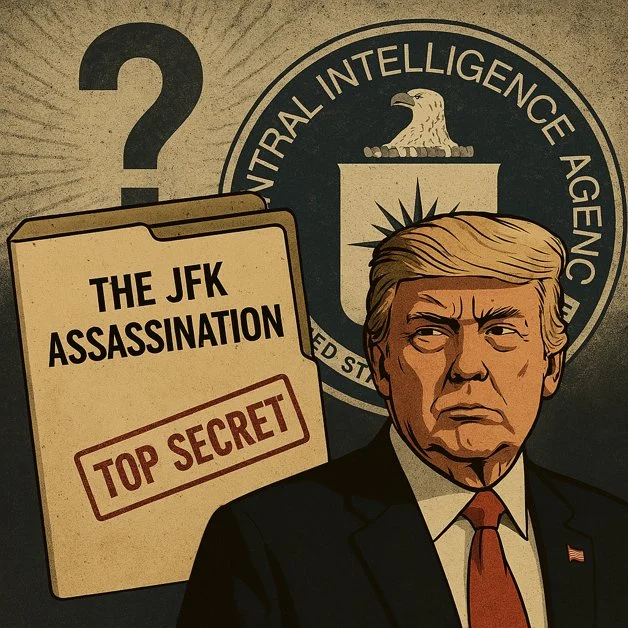
As he pledged during his second-term campaign, President Trump is systematically dismantling the Deep State infrastructure in the United States, including government agencies such as USAID. From the moment of his inauguration, he has been restructuring the federal bureaucracy, replacing key officials with loyalists, and eliminating institutional resistance. Having encountered significant internal opposition in his first term, he is now determined to sidestep such obstacles and push through his agenda more effectively.
These agencies were originally established to advance U.S. political interests worldwide through arms supplies, political leadership manipulation, and propaganda disseminated via controlled media. Over time, however, they were hijacked by powerful interest groups—including major arms suppliers, think tanks, and media conglomerates, some operating under the guise of NGOs. These groups redirected U.S. government funds, originally meant to promote American geopolitical influence, to serve their own agendas. This led to widespread political manipulation, global instability, and artificially instigated conflicts—actions that, at best, only marginally aligned with U.S. national interests. As a result, the U.S. found itself trapped in endless wars and geopolitical entanglements, which previous administrations were either unwilling or unable to escape.
Rather than prioritizing the nation’s well-being, these entrenched forces leveraged their wealth and influence to amass vast personal fortunes while embedding themselves deeply within the political and administrative system. The Deep State is not just a bureaucratic entity—it extends into Big Tech, intelligence agencies, and media organizations that shape narratives and exert social control. Trump appears poised to challenge these forces by curbing the influence of social media giants, reducing domestic government surveillance, and potentially restructuring intelligence agencies to limit their political interference.
What is striking, however, is the passive response from these entrenched interests as their carefully built power structures are being dismantled. Instead of taking direct action against Trump, they seem to be playing a longer game—funding opposition voices, amplifying dissent, and mobilizing those who feel disadvantaged by Trump’s policies in an effort to engineer his removal and restore the old order.
Strategic Realignment: China, Trade, and the Global Order
Trump’s interest in acquiring Greenland and Panama signals his strategic recognition of China as the primary geopolitical adversary of the future. Beyond countering China’s military and economic influence, he sees addressing America’s financial fragility as a top priority. His core strategy revolves around strengthening the U.S. economy by reducing national debt, withdrawing from non-essential global commitments (such as providing security for Europe), and restructuring America’s trade relationships. At the same time, he seeks to cultivate diplomatic ties with potential disruptors like Russia and North Korea, using pragmatic alliances to reshape the global order.
For Trump, the Ukraine war is an inconvenient distraction—one he wants to resolve swiftly while using it to assert his vision of a new geopolitical balance. His China containment strategy may include aggressive efforts to bring manufacturing back to the U.S., shifting supply chains to nations like India and Vietnam, and driving technological self-sufficiency in critical sectors such as semiconductors, where American reliance on Taiwan remains a strategic vulnerability.
The Dollar, Trade Wars, and Economic Sovereignty
Trump is also dismantling the long-standing U.S. policy of low import tariffs, which was previously justified as a means of fostering global economic growth through unrestricted access to the American market. He has come to realize that trade partners have supported the dominance of the U.S. dollar as the world’s reserve currency primarily because the U.S. has been willing to sustain global economic growth at its own expense—endlessly expanding its debt by printing more dollars. This arrangement has placed an overwhelming financial burden on the U.S., forcing it to shoulder a disproportionate share of global economic risk.
Trump understands that unless he dismantles this system, the U.S. economy could collapse under the weight of its mounting debt. He also recognizes that if America’s financial instability worsens, trade partners would inevitably abandon the dollar and act in their own self-interest. His response may include exerting greater influence over the Federal Reserve’s monetary policies—particularly regarding interest rates and money supply—which he sees as favoring Wall Street over ordinary Americans. Could he take steps toward a gold-backed currency or an alternative financial system to insulate the U.S. from economic manipulation?
As part of this economic recalibration, Trump is also challenging long-standing trade relationships. Nations like Canada, Mexico, and European allies, which have benefited from what he views as one-sided trade agreements, are being forced to renegotiate under more favorable terms for the U.S. A slow and gradual realignment would only prolong the process, allowing political forces time to obstruct his agenda. Instead, Trump is taking a more forceful approach, using economic leverage and policy shifts to accelerate change. This strategic shift echoes the global recalibrations described in What’s Driving the War in Ukraine?
The Balancing Act: Global Influence vs. Economic Stability
Trump has had to weigh two starkly contrasting choices: allow the U.S. to sink deeper into debt while continuing to prop up the global economy, or attempt to reverse America’s financial decline at the cost of relinquishing some global influence. The path he has chosen is clear—economic sovereignty over global hegemony. However, he is determined to manage this transition by leveraging America’s existing military and economic strength to safeguard its interests.
How effectively he executes this shift will ultimately define his legacy. If Trump succeeds in reshaping the U.S. economy, government structure, and global engagement, the question remains: how does he ensure that his policies are not undone by future administrations? Will he endorse a successor, push for electoral reforms, or implement structural changes to limit the Deep State’s ability to regain control?
The next few years will determine whether Trump’s vision leads to lasting transformation or whether entrenched forces find a way to reclaim their influence.
Share your thoughts or questions in the comment box below — I’d love to hear from you.